Featured Articles
Re-open quickly after a disaster
A business needs to be able to react immediately and confidently after a disaster, so it can quickly re-open and minimize loss. Below are plans the Federal Emergency Management Agency (FEMA) recommends developing to ensure workplaces are ready when a flood, tornado, earthquake, fire, hurricane, or other disaster strikes.
1. Emergency Response Plan – Planning for how a business will protect employees, visitors, property, and the environment during and after a disaster includes processes for evacuation, lockdown, sheltering, and other site-specific responses. Safety is the top priority when developing this plan, and it should also include a post-disaster process for cleaning up, evaluating damage, salvaging property, and protecting undamaged property. These property conservation efforts will help reduce business disruption and damage
2. Crisis Communication Plan – When a disaster happens, businesses need plans that will allow them to quickly and accurately communicate with customers, employees and their families, suppliers, regulators, government officials, the media, the community, and other stakeholders. Each of these audiences will want to know immediately if and how they will be impacted. A crisis communication plan helps businesses get the right messages to the right people in a timely and positive fashion. Often this plan will include descriptions of key audiences and their anticipated concerns, assignments for who will communicate with each audience and how, and scripted message templates
3. Business Continuity Plan – This important plan will help minimize business disruption, reduce financial loss, and retain customers. When developing a continuity plan, first conduct an impact analysis to pinpoint time-sensitive or essential business functions, and the resources and processes they require. From there, write processes for recovering these during an emergency. Create a business continuity group that will practice, test, and be trained to implement the plan
4. IT Disaster Recovery Plan – Many business activities depend on the use of information technology. An IT disaster recovery plan includes processes to rapidly restore hardware, applications, and data so the business can re-open quickly. It would also provide a plan for data backup to ensure critical files and information are kept safe
5. Employee Assistance Plan – Disasters can impact employees and their families. They may experience costly expenses or be forced to stay somewhere other than their homes. Support employees as much as possible as they recover from an emergency. It is helpful to develop a plan for how the business will aid affected employees, whether by providing financial assistance, connecting employees to the appropriate public agencies and services, or offering mental healthcare to help with the emotional impact of a disaster
Developing plans can help a business re-open quickly after an emergency. Other useful preparations include training employees and stocking safety supplies and first aid kits to ensure facilities are ready if a disaster occurs.
Block dust and minor irritants with an NS® 7000 Dust Mask
Not all airborne particulates that workers may come in contact with are necessarily toxic, but they can be irritating. The NS® 7000 Dust Mask is great for blocking dust, animal dander, grass clippings, pollen, sawdust, and other particulates that can be a nuisance when workers are trying to do their jobs.
Provide relief from dust and any other non-toxic airborne particulates by making the NS® 7000 Dust Mask available to your workers. The metal noseclip offers an easy adjustment for comfort and reduces eyewear fogging. Employees will be able to breathe easily through the lightweight design while preventing irritating, non-toxic dust from entering their mouth or nose.
Dangerous jobs that involve toxic substances must always be done with the proper safety products and may require an air-purifying respirator for complete lung protection. These dust masks are a great way to be comfortable while sweeping, raking, sanding, and more. Designed specifically for comfort, this mask is easy to wear and its construction guarantees a great fit and disposable convenience. The facility that manufactures the NS® 7000 Dust Mask is ISO 9002 Registered and ISO 14001 Certified.
Construction falls prevention campaign re-launched
The National Institute for Occupational Safety and Health (NIOSH), the Occupational Safety and Health Administration (OSHA), and CPWR - The Center for Construction Research and Training has announced the re-launch of a national campaign to reduce falls at construction sites. The announcement was made on Workers’ Memorial Day 2013, an observance held annually on April 28 to honor those who have lost their lives on the job and renew the nation’s dedication to creating safer workplaces.
"The re-launch of this campaign demonstrates our commitment to ensuring that contractors and workers stay safe on the job by providing the knowledge and tools they need," said NIOSH Director John Howard, M.D. During the first year of the campaign NIOSH, OSHA, and CPWR created resources to promote safety while working on ladders, scaffolds, roofs, and other high places.
The Bureau of Labor Statistics (BLS) reports that falls are the leading cause of occupational death and injuries in construction, an industry that experiences an average of two workplace fatalities per day. According to NIOSH, OSHA, and CPWR, these accidents can be avoided.
"Falls can be prevented and lives can be saved by planning ahead to get the job done safely, providing the right equipment and training workers to use the equipment safely," said Dr. David Michaels, assistant secretary of labor for occupational safety and health.
Protect workers from falls with the appropriate safety supplies such as fall protection and slip-resistant work boots.
"Hundreds of fall-related deaths and thousands of injuries can be prevented," said Pete Stafford, executive director of CPWR. "We're eager to re-launch the campaign and see fall protection used when workers are at heights."
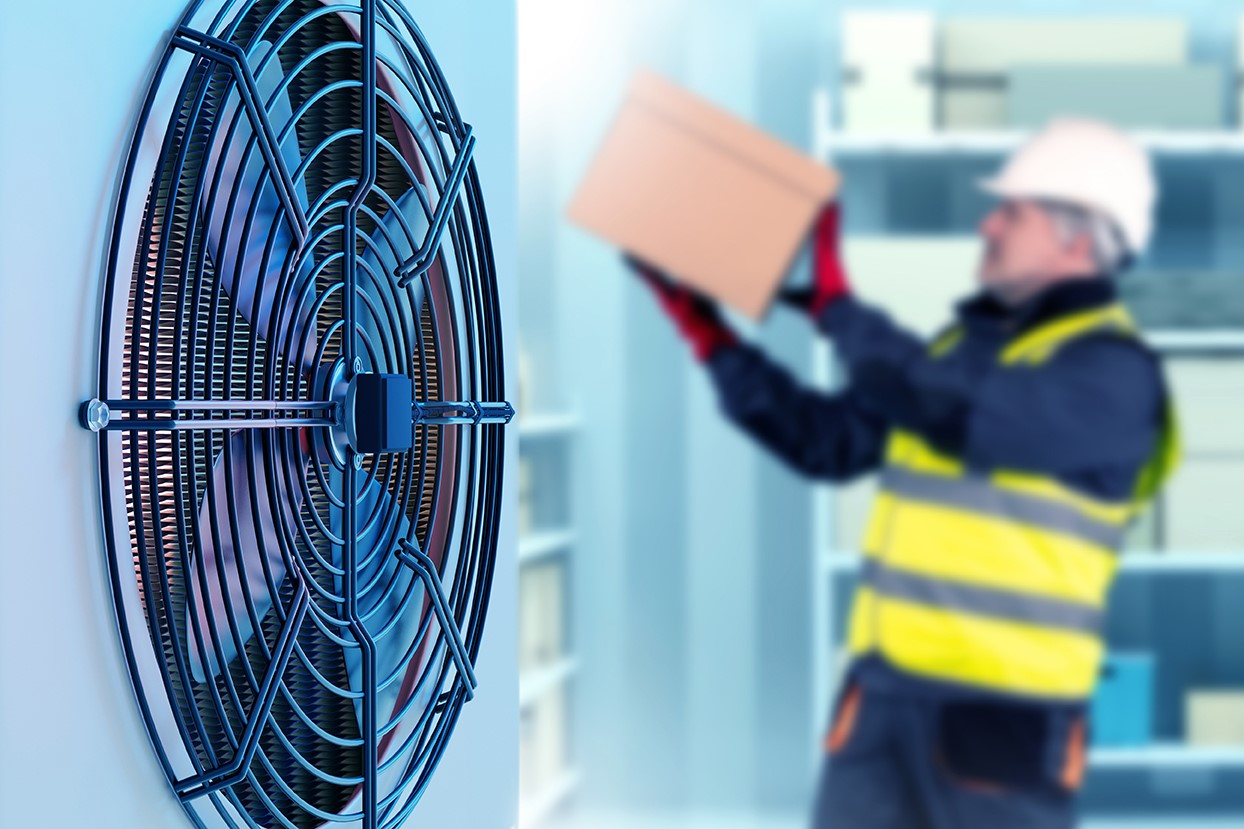
Maintain proper lifting techniques to avoid back strain
Jobs that require heavy lifting can strain muscles around backs and spines, especially when smart lifting practices are not followed. Consider the following guidelines from the Occupational Safety and Health Administration (OSHA) to ensure that your workforce isn't over-exerting itself.
Proper posture
One of the most frequent causes of back strain is a poor or awkward posture that causes improper lifting. The body is designed to lift things, but it must be done correctly or the spine and the muscles surrounding it will bear the brunt of the strain.
The most important rule of thumb is to lift with your legs and not with your back. This means that you should never bend over an object before lifting it. Bending over requires the back to support the weight of both the object and your upper body. It also moves the load away from the body, allowing leverage to significantly increase the pressure on the back and spine. Objects that are being lifted should be placed as close to the body as possible and lifted up while straightening the legs.
The same principle applies to the arms as well as the back. If workers need to reach out or up for an object before they pick it up, they are increasing the effective load and placing unnecessary strain on their shoulders by having the load away from the body. When objects are being moved, the surrounding area needs to be kept tidy to maintain easy access to the objects being lifted so that employees can avoid bending and reaching for those objects.
Carrying items
Lifting can cause many injuries, but the act of carrying is also responsible for other ailments as well.
Lifting and carrying without taking a break can cause overexertion and injury. The ideal location for heavy objects being carried is in the "power zone," which lies between the mid-thigh and the middle of the chest. At this point, carrying strength is at its most efficient. Workers should be encouraged to move very heavy objects first to stomach level on a table or box. After objects have been brought to this level, they should then be lifted and carried while keeping elbows close to the body.
Heavy objects should be held evenly by both hands and never on one shoulder, with one hand, or under one arm. This puts an imbalanced pressure on the spine, which can become damaged from overcompensating to balance the load.
Hands should be taken into account as well and should be protected with work gloves while lifting. Proper handholds, such as handles, slots, or hole cut-outs on boxes, should always be utilized to make lifting and carrying easier and more efficient. Handholds on objects should always have enough room to accommodate a gloved hand.
Whenever possible, heavy loads should be broken down into smaller units so that workers don't have to carry as much at once.
To ensure smart lifting, implement the use of forklifts, pallet jacks, and hand trucks to handle heavy objects and consider rotating or breaking up tasks to give muscles time to rest. Training your workforce about proper lifting techniques, including lifting and carrying loads that are balanced and in the "smart zone" will limit overexertion, sprains, and strains.
Northern Safety News & Information
About Northern Safety News & Information
When you're looking for industry news and product information, Northern Safety has exactly what you need to stay up to date! Get the most out of your visit with our free safety articles today. Northern Safety’s News and Information provides valuable industry safety tips and practices, frequently updated news content, and informative safety and industrial product articles. You can count on Northern Safety to help you keep your workers safe.Recent Articles
Disposable DuPont™ Tyvek® coveralls deliver comfort and safety
These versatile coveralls combine comfort and flexibility, and guard against mold, silica, …Read Full Article
Save money and tackle spills with NS® MonsterZorb® universal sorbent pads
Made from sonic-bonded, dimpled material, …Read Full Article
What Noise Reduction Rating (NRR) is right for your workplace?
Food safety during emergencies
FREE Safety Newsletter